TL;DR
Phase A is the first phase of an ADM cycle. It defines scope, stakeholders, concerns, and a high-level architecture vision, then secures approval to continue through a Statement of Architecture Work.
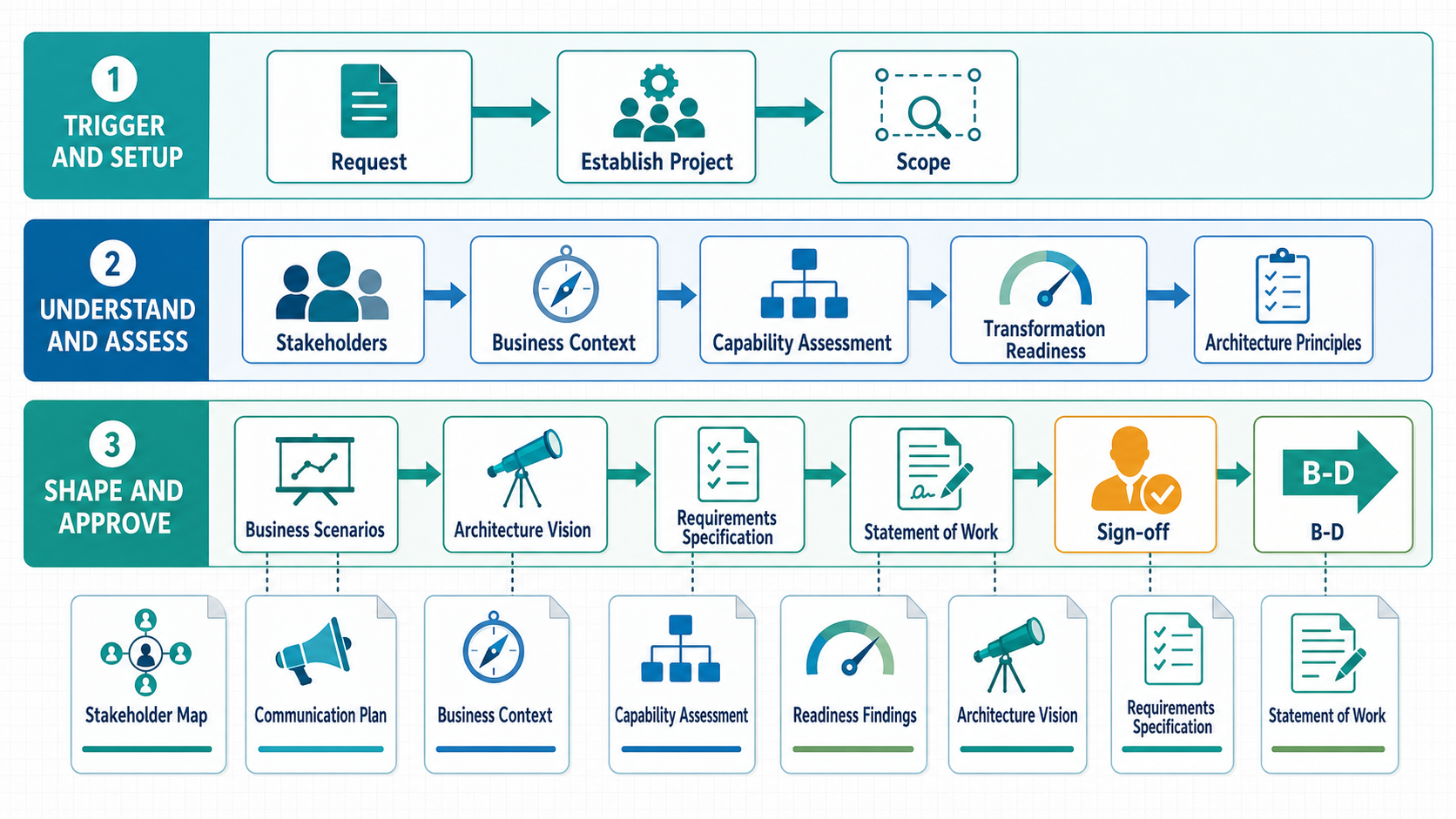
Why Phase A comes after Preliminary
The Preliminary Phase builds the capability to do architecture work.
Phase A is where a specific architecture engagement actually starts.
Simple way to remember:
- Preliminary = set up the architecture function
- Phase A = start a concrete architecture initiative
The formal trigger into Phase A is usually the Request for Architecture Work.
Main purpose of Phase A
The goal of Phase A is to create a shared direction before deep design starts.
In practical terms, it does five things:
- defines the scope of the architecture engagement
- clarifies the problem/opportunity being addressed
- identifies stakeholders and their concerns
- creates the Architecture Vision
- obtains approval to proceed
If you want the practical step-by-step walkthrough, see Steps.
For the exam-friendly end-to-end flow, see Approach.
The two core objectives
flowchart TD
    REQ["Request for Architecture Work"] --> OBJ1["Develop Architecture Vision"]
    OBJ1 -->|"informs"| OBJ2["Statement of Architecture Work"]
    OBJ2 -->|"approval"| PROCEED["Proceed to Phase B"]
    OBJ1 --> V1["Business context and drivers"]
    OBJ1 --> V2["Stakeholder concerns"]
    OBJ1 --> V3["Baseline to Target direction"]
    OBJ1 --> V4["Value proposition"]
    OBJ1 --> V5["Risks and constraints"]
1) Develop the Architecture Vision
Create the Vision Deliverable: a high-level, aspirational view of:
- business value expected
- capabilities to be delivered
- direction of change from baseline to target
At this stage, the architecture stays intentionally high-level — no detailed design yet.
2) Obtain approval for the Statement of Architecture Work
The Statement of Architecture Work is a key TOGAF deliverable.
It’s essentially the formal agreement between architecture sponsors and the architecture team on:
- scope and objectives
- constraints and assumptions
- approach and governance expectations
- what value the engagement should deliver
Without this approval, later phases tend to become unclear or contested.
What the Architecture Vision includes
A strong Phase A vision usually includes:
- business context: principles, goals, drivers, and constraints
- stakeholder concerns and expected outcomes
- high-level baseline and target direction
- value proposition and success indicators
- risks, constraints, and major dependencies
For TOGAF learning, it helps to show baseline/target direction across all four domains:
- business
- data
- application
- technology
Common outputs from Phase A
Typical outputs include:
- Architecture Vision
- approved Statement of Architecture Work
- initial Capability Assessment
- initial Transformation Readiness findings
- initial Requirements Specification
- initial scope and constraints definition
- reviewed Business Context
- stakeholder map and concern framing
Common mistakes in Phase A
- jumping into solution detail too early
- weak stakeholder alignment
- vague scope boundaries
- trying to proceed without formal approval
- treating sponsor sign-off as paperwork instead of evidence of consensus
Exam note
- Phase A is the first phase of the ADM cycle (after Preliminary).
- Its focus is vision, scope, stakeholder concerns, and approval to proceed.
- The Statement of Architecture Work is a key output used to authorize and govern the engagement.
- Request for Architecture Work in, Statement of Architecture Work out is a key Phase A pattern.