TL;DR
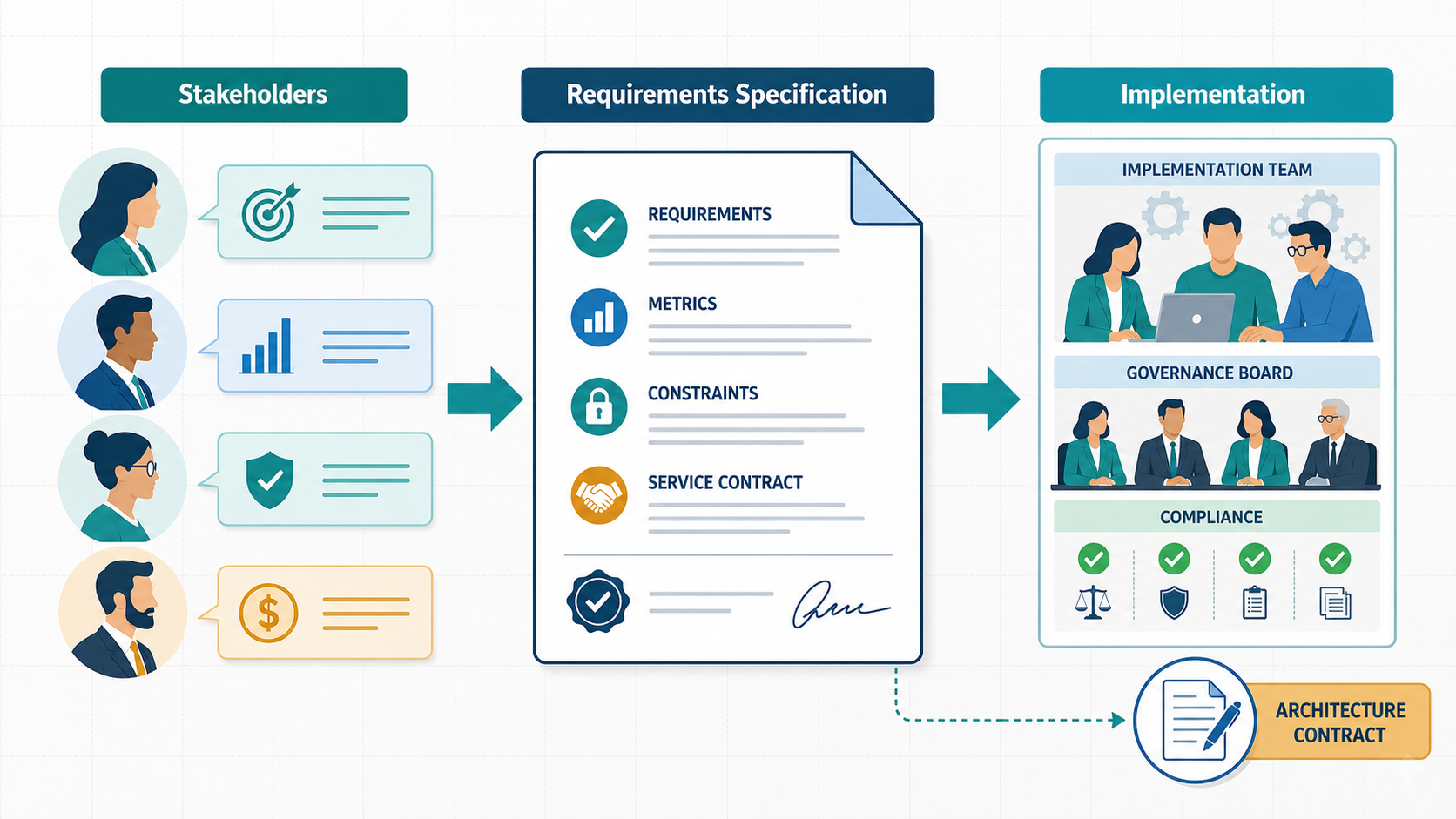
The Architecture Requirements Specification captures the measurable requirements an implementation must satisfy to comply with the architecture. It starts in Phase A and is enriched through later ADM phases as more domain-specific requirements are discovered.
Why it matters in Phase A
In Phase A, stakeholders are identified along with their concerns and requirements. One important goal is to turn stakeholder business needs into architecture requirements that can be governed.
TOGAF names two important places for requirements:
- Architecture Requirements Specification: the controlled deliverable for in-scope architecture requirements
- Architecture Requirements Repository: the repository location for requirements, including out-of-scope requirements and items for later handling
What It Is
The specification is the requirements-focused companion to the Architecture Definition Document.
It provides a quantitative view of the solution: the measurable criteria the implementation must meet in order to conform to the architecture.
In practice, it defines what an implementation project must do to comply with the architecture and becomes an important part of implementation governance and the Architecture Contract.
Typical Content
Common content includes:
- architecture requirements
- success measures and acceptance criteria
- constraints and assumptions
- business service contracts
- application service contracts
- implementation guidelines
- implementation specifications and standards
- interoperability requirements
- IT service management requirements
TOGAF templates commonly group this content around architecture requirements, service contracts, and implementation details.
ADM Evolution
The specification begins in Phase A: Architecture Vision.
It is then expanded through the architecture phases:
- Phase B: adds business architecture requirements
- Phase C: adds data and application architecture requirements
- Phase D: adds technology architecture requirements
- Phase F: finalizes the specification during migration planning
- Phases G and H: use it for implementation governance, compliance, and architecture change management
Requirements Management keeps the specification updated when new or changed requirements appear.
Exam note
- The Architecture Requirements Specification is created in Phase A and refined across later ADM phases.
- It focuses on measurable, in-scope requirements for architecture compliance.
- Out-of-scope requirements belong in the Architecture Requirements Repository.
- It is important for Architecture Contracts and implementation governance.