TL;DR
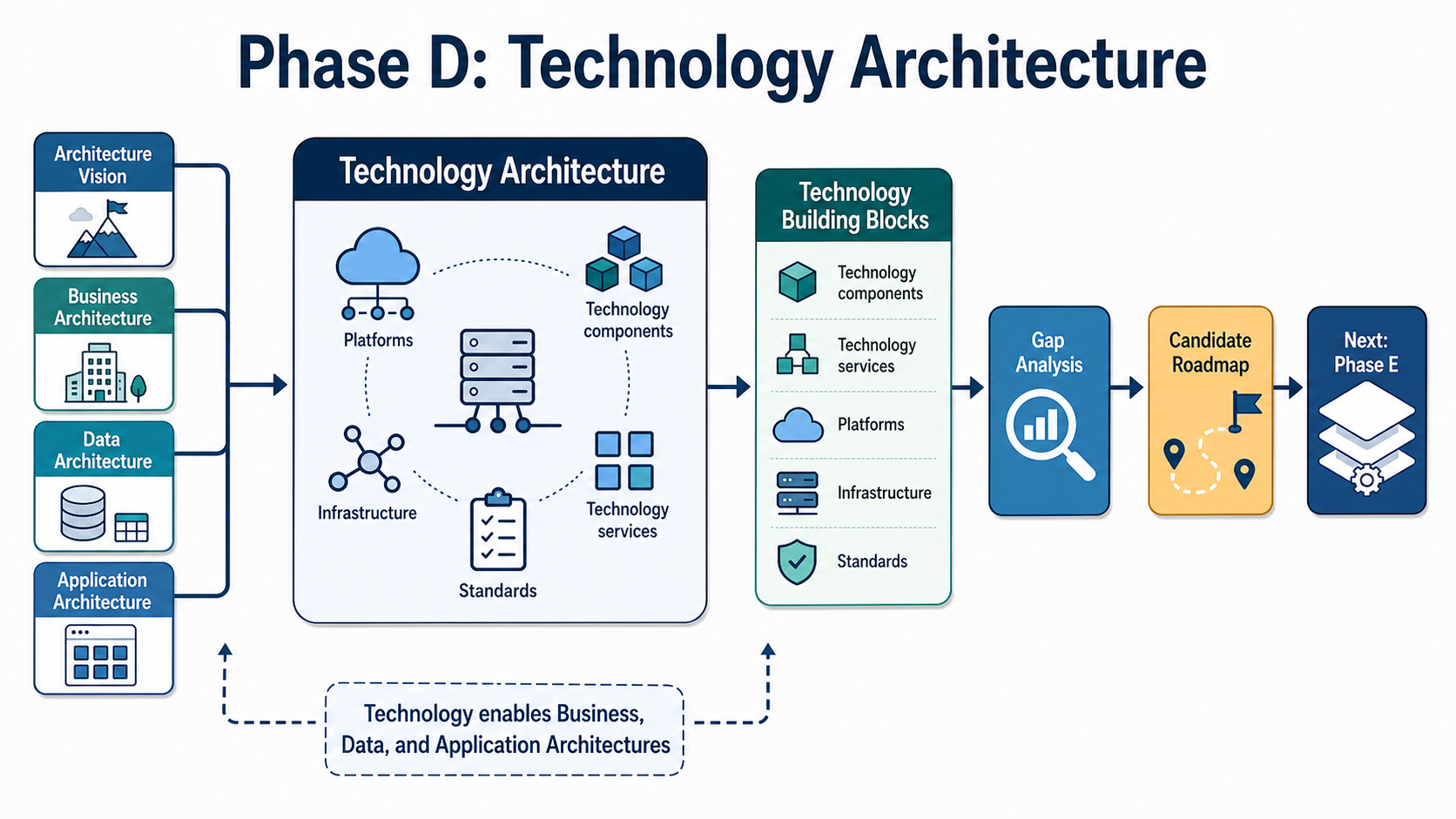
Phase D develops the target Technology Architecture. It defines the technology components, technology services, and technology building blocks needed to support the agreed Architecture Vision and the target Business, Data, and Application Architectures.
Where Phase D sits
Phase D is the third domain-architecture phase in the ADM cycle.
The domain sequence is:
- B — Business Architecture
- C — Information Systems Architectures: Data and Application
- D — Technology Architecture
Technology Architecture supports the business, data, and application architectures.
Exam shortcut
If an exam question is mainly about technology, infrastructure, platforms, or technology services, think Phase D.
Purpose
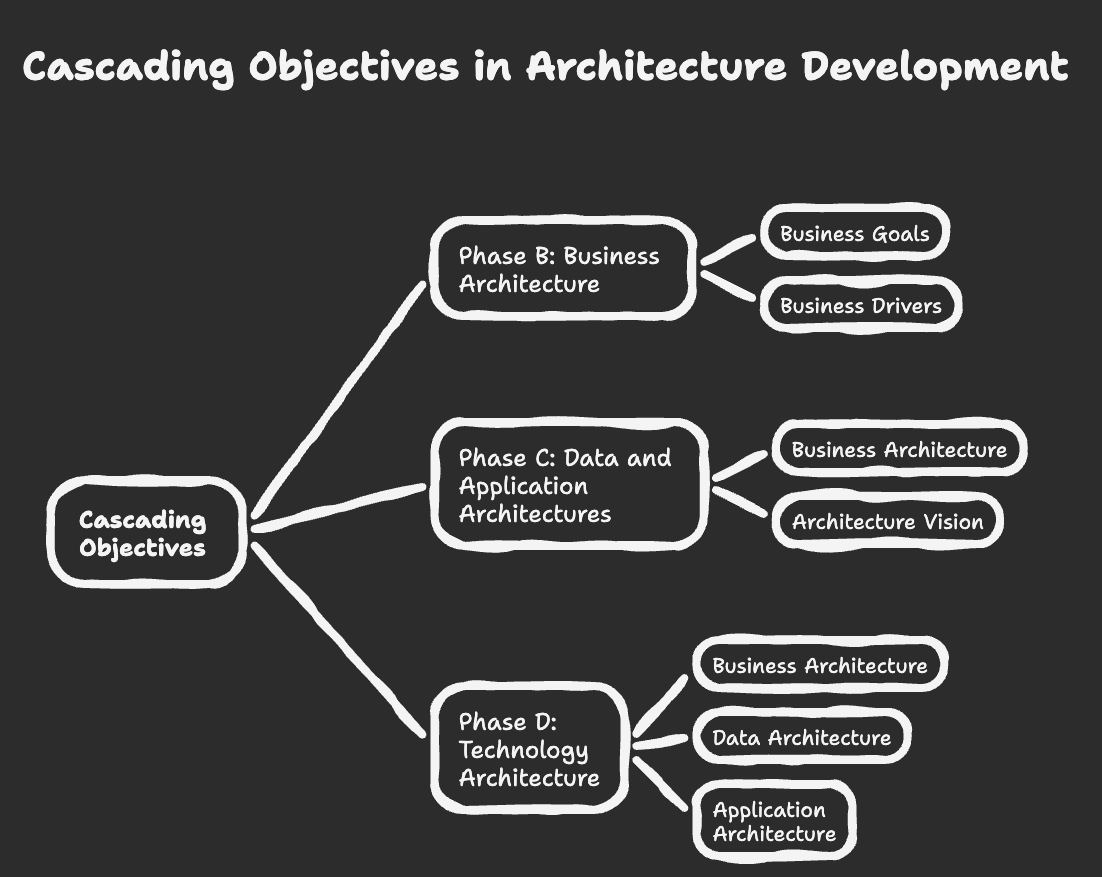
Develop the target Technology Architecture to support the agreed Architecture Vision.
This follows the same purpose pattern used in Phases B, C, and D:
- Phase B develops Business Architecture
- Phase C develops Information Systems Architectures
- Phase D develops Technology Architecture
Each domain architecture supports the agreed Architecture Vision.
Objectives
- Develop the target Technology Architecture. Describe how the Architecture Vision and target Business, Data, and Application building blocks will be delivered through technology components and technology services in a way that addresses the Statement of Architecture Work and stakeholder concerns.
- Identify candidate Architecture Roadmap components based on gaps between the baseline and target Technology Architecture.
In short:
- develop the Technology Architecture
- identify candidate roadmap components from baseline-to-target technology gaps
Cascading objectives
Core flow
flowchart LR
    AV["Architecture Vision"]
    BA["Business Architecture"]
    DA["Data Architecture"]
    AA["Application Architecture"]
    TA["Technology Architecture"]
    TBB["Technology Building Blocks"]
    GAP["Gap Analysis"]
    ARC["Candidate Architecture Roadmap Components"]
    E["Proceed to Phase E"]

    AV --> TA
    BA --> TA
    DA --> TA
    AA --> TA
    TA --> TBB
    TBB --> GAP
    GAP --> ARC
    ARC --> E
Typical artifacts
Phase D commonly produces artifacts related to technology platforms, environments, and infrastructure, such as:
- Technology Portfolio Catalog
- Platform Decomposition Diagram
- Environments and Locations Diagram
- technology standards views
- infrastructure platform views
- technology service catalogs
A simple memory hook: if the architecture artifact is mainly about technology, it usually belongs in Phase D.
Relationship to Phase C
Phase D does not define applications or data again. It defines the technology needed to support them.
Use Phase C to understand:
- application components and interfaces
- data entities and data movement
- information systems gaps
- application and data requirements that need technology support
Then define the technology components, services, and platforms needed to support that information systems architecture.
For practical development guidance, see Approach.
Exam note
- Phase D is Technology Architecture.
- It develops the target Technology Architecture to support the agreed Architecture Vision.
- Technology Architecture enables the target Business, Data, and Application Architectures.
- Phase D identifies candidate Architecture Roadmap components based on gaps between baseline and target Technology Architecture.
- Questions about infrastructure, platforms, hardware, technology services, or technology standards usually point to Phase D.