TL;DR
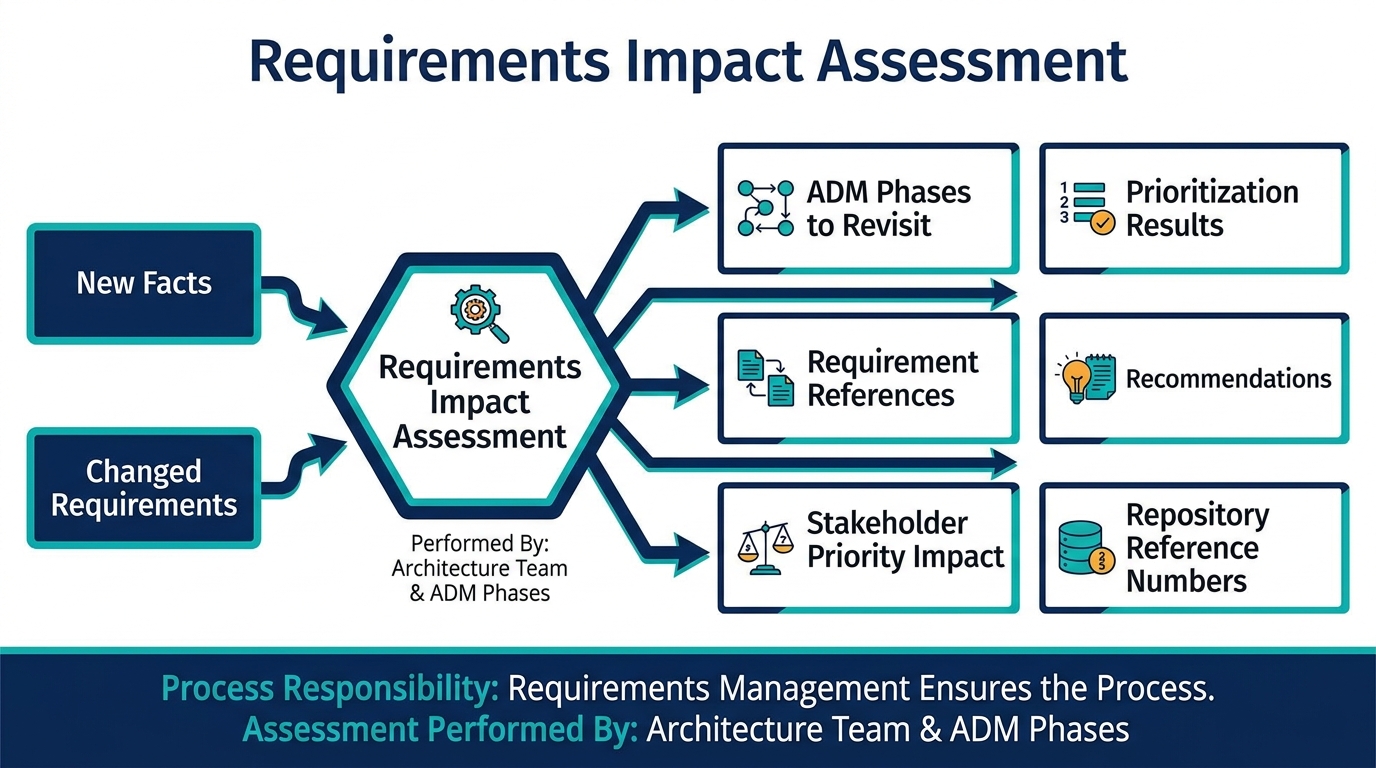
The Requirements Impact Assessment assesses how new or changed requirements affect the current architecture requirements and specification. It is performed in ADM phases by the architecture team, while Requirements Management ensures that the process is operated and the assessment is performed.
What it is
The Requirements Impact Assessment is the deliverable used to assess the impact of changed requirements on previous and current ADM phases.
Throughout the ADM, new information is collected about the architecture.
As new facts emerge, they may invalidate existing architecture assumptions, requirements, or specification details.
The Requirements Impact Assessment identifies:
- what needs to change
- why it needs to change
- which architecture requirements are affected
- which ADM phases may need to be revisited
- what the implications of the change are
Who performs it
The Requirements Impact Assessment is performed in the ADM phases.
It is not performed by Requirements Management as a separate architecture design activity.
Requirements Management operates the requirements management process and ensures that the assessment is performed by the architecture team.
| Activity | Responsible area |
|---|---|
| Operate the requirements management process | Requirements Management |
| Ensure impact assessment happens | Requirements Management |
| Assess the impact on architecture work | ADM phases and architecture team |
| Decide whether phases must be revisited | ADM phases and architecture governance |
Purpose
The purpose is to assess the current architecture requirements and specification so that necessary changes and their implications can be identified.
It helps the architecture team decide whether new information affects:
- current requirements
- stakeholder priorities
- architecture specifications
- previous ADM phase outputs
- current ADM phase work
- future ADM phase work
Typical content
A Requirements Impact Assessment may include:
- ADM phases to be revisited
- requirements prioritization results
- recommendations for managing requirements
- references to specific requirements
- impact on stakeholder priorities
- repository reference numbers
Repository reference numbers help connect the assessment to the underlying facts stored in the Architecture Requirements Repository.
Relationship to Requirements Management
Requirements Management receives and coordinates requirement changes, but architecture impact must be assessed where the architecture work is being done.
That is why the Requirements Impact Assessment is linked to the ADM phases.
In simple terms:
- Requirements Management keeps the process running.
- ADM phases perform the architecture assessment.
- The architecture team uses the assessment to decide what must change.
Exam note
- The deliverable is called the Requirements Impact Assessment.
- It assesses the impact of changed requirements on previous and current ADM phases.
- It is performed in the ADM phases, not directly in the Requirements Management phase.
- Requirements Management operates the process and ensures the assessment is performed.
- New facts gathered during ADM may invalidate existing architecture requirements or specification details.
- The assessment identifies changes that should be made and the implications of those changes.
- Typical content includes ADM phases to revisit, requirements prioritization results, recommendations, requirement references, stakeholder priority impact, and repository reference numbers.