TL;DR
TOGAF can support the digital enterprise by helping agile teams deliver digital products and services faster, while still managing complexity, technical debt, standards, reusable components, and governance guardrails.
Context
TOGAF Standard, 10th Edition includes guidance for using TOGAF in the digital enterprise.
The related TOGAF Series Guide is Using the TOGAF Standard in the Digital Enterprise.
The main idea is that enterprise architecture can support agile digital delivery without removing the speed and flexibility that digital teams need.
Digital Architecture
The inclusive architecture focused on a combination of Enterprise Architecture, data science, telecommunications and Internet of Things (IoT), security, artificial intelligence, cognitive science, neuroscience, robotics, and social media to deliver operational services.
What a digital enterprise is
A digital enterprise can be characterized in two ways.
First, it creates digitalized products or services that are delivered fully digitally.
Examples include:
- digital media
- online banking
- online platforms
- digital subscriptions
Second, it can provide physical products or services that customers obtain through digital means.
Examples include:
- online car sharing services
- app-based delivery services
- digitally booked physical services
- connected product-service experiences
How TOGAF supports digital enterprise
TOGAF and enterprise architecture support digital enterprise by helping teams deliver and improve digital products and services faster, easier, and better.
This support includes:
- simplifying complexity in the digital ecosystem
- establishing enterprise architecture capability
- supporting operational excellence
- managing digital products and services
- enabling agile development methods as one of the organization’s frameworks
Supporting agile environments
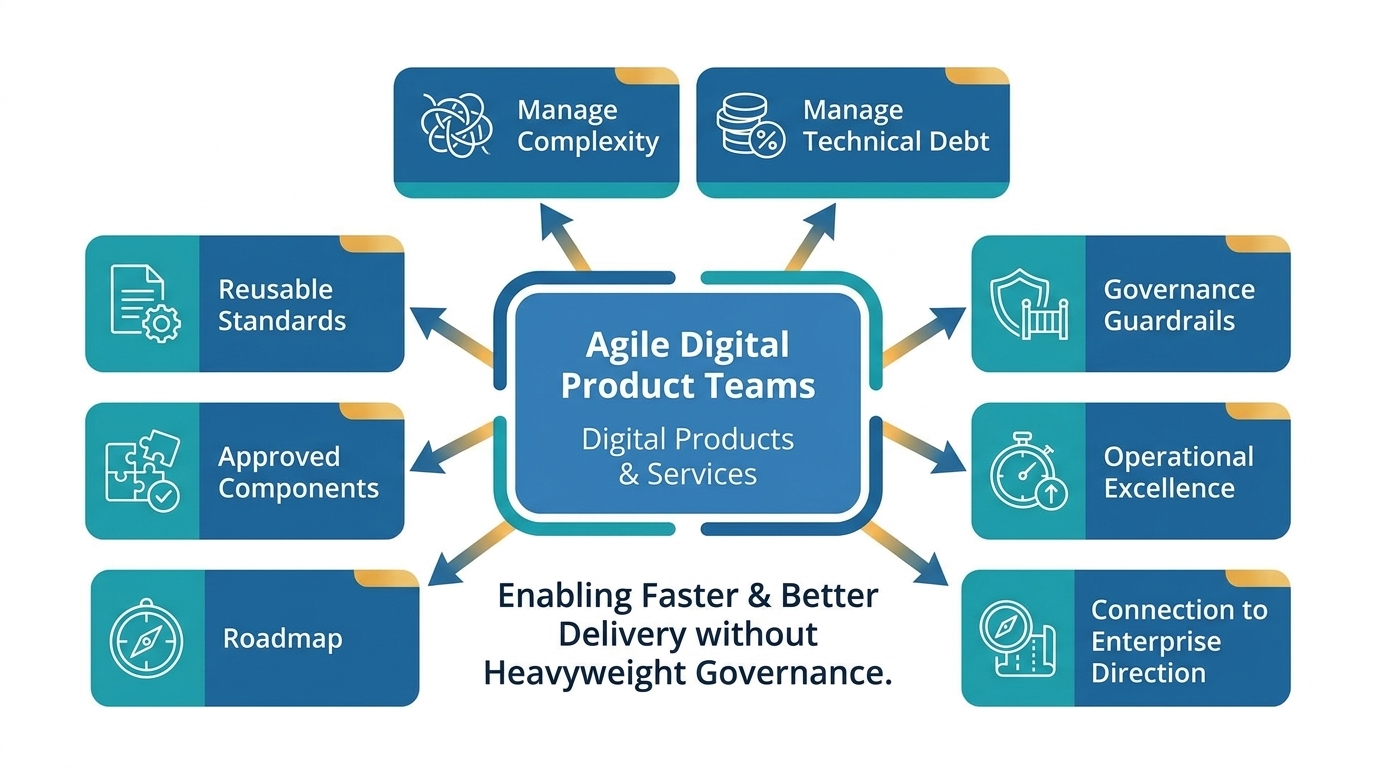
Enterprise architecture supports agile environments by giving them useful structure without turning agile delivery into heavyweight governance.
It can help by:
- managing technical debt created during sprint-based delivery
- identifying standards that shorten agile development cycles
- identifying reusable standard components
- providing governance guardrails for component reuse
- connecting agile product work to enterprise direction
The point is not to slow agile teams down.
The point is to make agile delivery more cohesive, connected, and reusable across the enterprise.
Technical debt and guardrails
Digital teams often create technical debt as they deliver quickly.
Enterprise architecture helps manage that debt in a connected way, so local sprint decisions do not create unmanaged enterprise-wide complexity.
Architecture guardrails can help teams understand:
- which standards should be reused
- which components are approved
- which constraints matter
- where flexibility is allowed
- when governance review is needed
Exam note
- TOGAF Standard, 10th Edition includes digital enterprise guidance.
- A digital enterprise delivers digitalized products or services fully digitally, or enables access to physical products and services through digital means.
- Enterprise architecture helps digital enterprises deliver products and services faster, easier, and better.
- TOGAF supports agile environments by managing technical debt, reusable components, standards, and guardrails.
- TOGAF can simplify complexity in the digital ecosystem.
- Enterprise architecture capability supports operational excellence and management of digital products and services.
- Agile development methods can be institutionalized as another framework used in the organization.