TL;DR
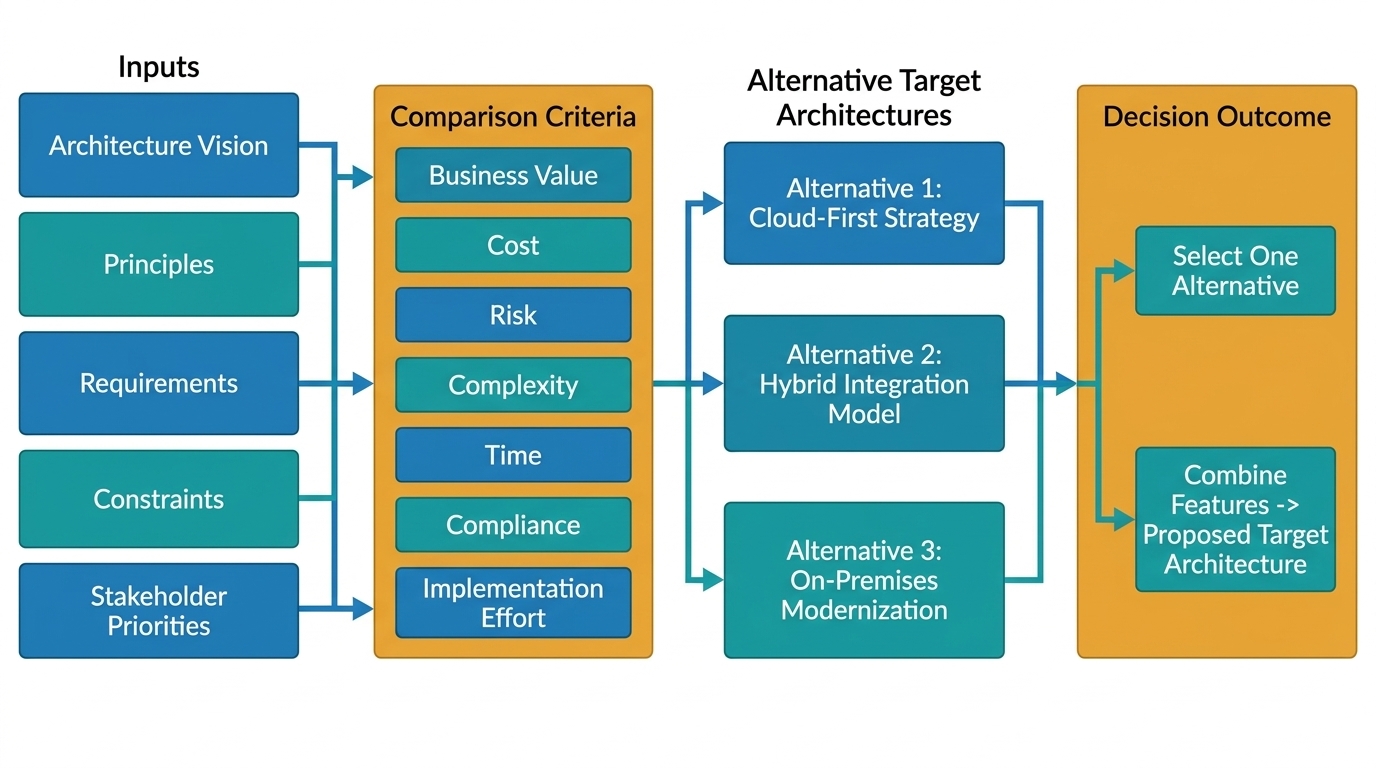
Architecture development often produces more than one valid target architecture. The Enterprise Architect identifies alternatives, compares trade-offs, discusses them with stakeholders, and either selects one option or combines features into the proposed target architecture.
Why alternatives matter
When developing enterprise architecture, there may be multiple target architectures that conform to:
- the Architecture Vision
- architecture principles
- stakeholder requirements
- constraints
Each valid target architecture can have advantages and disadvantages.
Sometimes no single target architecture satisfies all stakeholder requirements.
This is why alternatives and trade-offs matter.
Role of the Enterprise Architect
The Enterprise Architect identifies alternative target architectures and builds an understanding of the different possibilities.
The Enterprise Architect also identifies trade-offs between alternatives and competing forces.
Those competing forces may include:
- stakeholder priorities
- business value
- cost
- risk
- complexity
- time
- compliance
- implementation effort
Stakeholder value
Presenting architecture alternatives to stakeholders helps make hidden assumptions visible.
It can also reveal:
- hidden stakeholder agendas
- conflicting priorities
- missing requirements
- new architecture principles
- new constraints
- better decision criteria
The purpose is not only to compare options. It is also to improve the shared understanding of what stakeholders really value.
Alternatives and trade-off method
TOGAF provides an Architecture Alternatives and Trade-Offs technique.
The method can be summarized in three steps.
- Use the vision, principles, requirements, and other information to select criteria for comparing alternatives.
- Define alternatives based on the criteria and build an understanding of each alternative.
- Select one alternative, or combine features from multiple alternatives, to create the proposed target architecture.
Outcome
The outcome is a proposed target architecture that has been shaped through conscious comparison.
This makes the target architecture easier to defend because stakeholders can see:
- which alternatives were considered
- what criteria were used
- what trade-offs were accepted
- why the proposed target architecture was selected
Exam note
- Multiple target architectures may conform to the Architecture Vision, principles, and requirements.
- Each alternative may have advantages and disadvantages.
- Sometimes no single alternative satisfies all stakeholder requirements.
- The Enterprise Architect identifies alternatives and trade-offs.
- Discussing alternatives with stakeholders can reveal hidden agendas, new requirements, or new principles.
- The method uses criteria based on vision, principles, requirements, and other information.
- The final target architecture may select one alternative or combine features from several alternatives.