TL;DR
The Implementation Governance Model is created in Phase F and applied in Phase G. It defines how architecture governance will work inside implementation projects.
What it is
Phase F completes the architecture development cycle and prepares the transition from developing the enterprise architecture to realizing it.
The Implementation Governance Model supports that transition.
It defines how architecture governance will be applied to implementation projects, so the move into implementation also creates a clear move into governance.
Purpose
The Implementation Governance Model enables architecture governance within implementation projects.
It helps ensure that implementation work stays aligned with the approved architecture, roadmap, and migration plan.
Even when an organization already has an architecture function and a governance framework, implementation still needs project-specific governance details.
Those details include:
- implementation processes
- roles
- responsibilities
- measures
- checkpoints
- success and failure criteria
Typical content
The model usually contains:
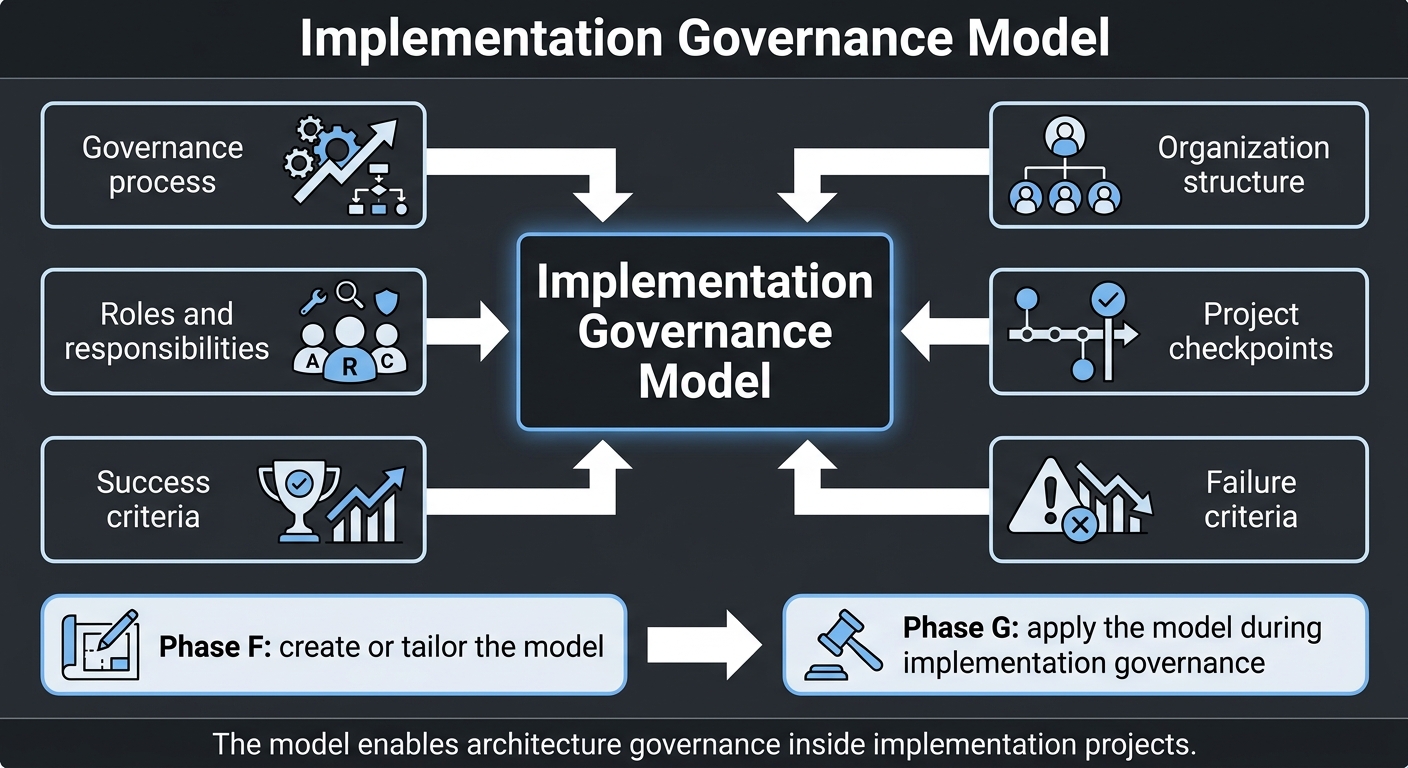
- governance process
- organization structure
- roles and responsibilities
- project checkpoints
- success criteria
- failure criteria
The TOGAF library provides a Microsoft Word template. The template structure mirrors these main elements.
ADM usage
| ADM point | Use of the model |
|---|---|
| Phase F: Migration Planning | Create the Implementation Governance Model or tailor the existing governance approach for the planned implementation projects |
| Phase G: Implementation Governance | Apply the model during implementation governance |
If a governance model already exists, Phase F does not invent a new one from scratch. It tailors the existing approach for the specific implementation projects.
Exam note
- The Implementation Governance Model is created in Phase F.
- It enables architecture governance within implementation projects.
- It defines governance process, organization structure, roles and responsibilities, checkpoints, and success/failure criteria.
- Existing governance frameworks may still need project-specific tailoring.
- The model is applied in Phase G.